Walter Bernhard Oettinger
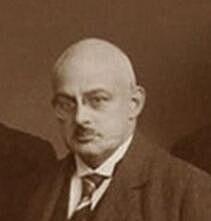
Walter Bernhard Oettinger,
um 1921 (Landesarchiv Berlin, F Rep. 290 Nr. II3091, Ausschnitt. Foto: k. A.)
Walter Bernhard Oettinger was born on 20 January 1879 in Breslau, the son of Minna Oettinger née Weinstein (1852–1941) and the merchant Max Oettinger (??–??). He had three siblings: Albert, who died in infancy in 1875, Rebecca Friederike Frieda Gertrud (1877–1936) and Margarete (1883–1941).
Walter Oettinger studied medicine from 1897 in Freiburg im Breisgau and Breslau, where he was awarded his doctorate in 1904. He subsequently worked as an assistant and later as an associate professor and senior physician at the Institute of Hygiene (Hygienisches Institut) at the University of Breslau. He served as a soldier in the First World War and, from 1918/1919, headed the Bacteriological Institute at the Charlottenburg-Westend Municipal Hospital as well as the Municipal Investigation Office for Infectious Diseases (Städtisches Untersuchungsamt für ansteckende Krankheiten) in Charlottenburg-Westend. From 1921, Oettinger served as a civil servant, holding the posts of City Medical Officer (Stadtmedizinalrat) and City Councillor for Health (Stadtrat für Gesundheitswesen) in Charlottenburg, which had become an administrative district of Greater Berlin in 1920. He also taught at the Charlottenburg Academy of Social Hygiene (Sozialhygienische Akademie). In his research, he dealt with ‘race science’ (‘Rassenkunde’) and ‘racial hygiene’ (‘Rassenhygiene’) issues, which were popular at the time.

Autogramm "Dr. Oettinger"
Oettinger, who had converted to Protestantism in 1906, was persecuted by the Nazis because of his Jewish heritage. After his twelve-year term as a city councillor, which ended in March 1933, was not renewed, he was forced into retirement. In light of the increasing anti-Semitic violence and repression, he began looking for ways to leave Germany in the mid-1930s.
In mid-June 1938, Oettinger traveled to the United States, but had to return to Europe as early as the beginning of July of that year, as his passport expired just a few weeks after his arrival and he was unable to find employment in the United States.
On his return journey to Berlin, Oettinger wrote from London on 11 July 1938 to his friend and former colleague Alfred Korach (1893–1979), who had been a municipal doctor (Stadtarzt) and active Social Democrat in Berlin-Prenzlauer Berg and had already fled Germany in 1933, describing his situation:
"I cannot view my prospects in America as favourably as you so kindly do;
you are forgetting that I will soon be 60. Naturally, I can no longer aspire to
a permanent position. I […] would have no hesitation in giving up my pension
if my financial security were assured for two or three years abroad; that is, for
example, why I decided to undertake this journey at the last minute”
As he reports in his letter to Korach, Oettinger sought a grant to conduct a scientific study in order to ensure his financial security during his time in the United States. However, his efforts were apparently unsuccessful.
On his way back from the US to Germany in the summer of 1938, Oettinger stopped off in the Netherlands, also searching of a long-term opportunity to stay. In Amsterdam, he visited his former colleague from Charlottenburg, the doctor and SPD city councillor Ludwig Jaffé (1883–1939, died by suicide), who was living in exile there. Jaffé reported on the meeting in a letter to Alfred Korach dated 5 December 1938:
“Oettinger was here for two days, […] I was also able to arrange for him to
meet various people, but nothing came of it here, and all I know is that his
old address is no longer valid, though I do not know where he is. His last
words to me and my wife as we said goodbye were:
‘I feel as if I’m being taken to my execution.’”
Until the fall of 1938, Oettinger had lived at Knesebeckstraße 56 in Berlin-Charlottenburg but then had to give up the apartment, as Ludwig Jaffé’s note suggests. Oettinger is no longer listed in the Berlin address books after 1939. In the May 1939 census (German Minority Census), he was recorded with the Berlin address Schlüterstraße 44. By the fall of that year at the latest, he was subletting a single room at Stübbenstraße 1 in Berlin-Schöneberg.
According to his declaration of assets (Vermögenserklärung) dated 13 August 1942, Oettinger possessed at that time only a few items of clothing and furniture, as well as a “collection of books”. The city of Berlin had ceased paying his pension since February 1942.
On 15 August 1942, Walter Oettinger was deported from Berlin to Riga, where he was shot in the Rumbula or Biķernieki woods shortly after his arrival on 18 August 1942.
Heirs / Family members
Walter Oettinger was unmarried and had no children.
His widowed mother, Minna Oettinger, died in Berlin in June 1941.
His sister Frieda was married to the physician and journalist Paul Henry Gerber (??–1919) and lived with him in Königsberg. The couple had two sons: Heinz Wolfgang Richard (1906–1941) and Hans (1907–??). Frieda Gerber moved to Berlin around 1934, where she died in January 1936.
Frieda‘s son, Heinz Gerber, was a lawyer and, after 1933, worked as an electrical mechanic in Berlin, among other things, due to the ban on Jewish lawyers practicing law. When he was accused of alleged “Rassenschande”, he fled in 1937 to his aunt Margarete Grünfeld and her family in Katowice, and on to Prague in 1938. While attempting to leave Prague after the German Wehrmacht’s invasion in March 1939, he was arrested and imprisoned at Luckau penitentiary (Zuchthaus) and the Berlin Police Prison beginning in November 1939. In early 1941, he was deported as a “protective custody prisoner” (“Schutzhäftling”) to the Sachsenhausen concentration camp and later to the Groß-Rosen concentration camp. Heinz Gerber died there on 9 September 1941. In his curriculum vitae written for the Luckau penitentiary and on a personal questionnaire for the effects room in the Groß-Rosen concentration camp, Gerber listed his uncle Walter Oettinger as his contact person and heir.
Heinz Gerber’s younger brother Hans was, like his uncle Walter Oettinger, a physician. In December 1938, he was interned at Sachsenhausen concentration camp. In the census of May 1939, he was recorded at the same address as his uncle, at Schlüterstraße 44. In the same year, Hans Gerber managed to emigrate to Great Britain, where he subsequently called himself John Henry Gerber and served as a doctor in the British Army. After the end of the Second World War, he worked for, amongst others, the United Nations Relief and Rehabilitation Administration and the World Health Organization. As far as is known, John Henry Gerber had no children.
Walter Oettinger’s sister Margarete, who lived in Katowice, and her husband, the building contractor Hugo Grünfeld, had three children: Walter (1908–1988), Lotte (1910–1990) and Marianne Ilse Hanna (1912–1942).
Following the German invasion of Poland in early September 1939, Margarete and Hugo Grünfeld fled from Katowice to Lemberg (Lwów). Hugo Grünfeld died there in mid-September 1939 of pneumonia. In 1940, Margarete Grünfeld was forcibly resettled from Lwów – which had been occupied by the Red Army in mid-September 1939 – to the Soviet Republic of Mari El (Marijskaja). In the autumn of 1941, she managed to travel on to Uzbekistan. There she died of typhus in November 1941.
Her youngest daughter, Marianne Grünfeld, went to Paris in 1933 and to England in 1937, where she worked as an au pair in both places. She subsequently studied horticulture at the University of Reading. In April 1940, she took up a position on a farm on the British Channel Island of Guernsey. Following the occupation of Guernsey by the German Wehrmacht in June 1940, she was identified as ‘Jewish’ in April 1942 and expelled from the island to Vichy France. In Laval (Mayenne), she found accommodation in a hospice run by nuns. On 15 July 1942, she was arrested, and, on 20 July 1942, deported from Angers (Maine-et-Loire) to the Auschwitz concentration camp. Marianne Grünfeld did not survive the Shoah.
Marianne’s older brother, Walter Grünfeld, studied economics in Munich and was awarded a doctorate in Basel in 1933. He held a senior position in his father’s company in Katowice. Following the German invasion of Poland, he fled to Italy in 1939, to Turkey in 1940, and to the then British Mandate of Palestine in 1941. From there, he managed to emigrate to the British Protectorate of Northern Rhodesia. In 1947, he went to South Africa, where he founded a mineral trading company. Walter Grünfeld died in Switzerland in 1988.
Lotte Grünfeld attended courses at the School of Applied Arts and the Pestalozzi-Fröbel-Haus in Berlin around 1930. At the end of 1931, she returned to Katowice to train as a furniture manufacturer in her father’s company. In 1933, she married the chemist Zygmunt Weingrün and gave birth to their daughter Nina (Janina) in 1935. After the outbreak of the Second World War, the young family managed to flee Poland via Romania and Cyprus to the British Mandate of Palestine, which they reached in mid-1941. Later, like Lotte’s brother Walter, they emigrated to South Africa. Zygmunt Weingrün died in Johannesburg in 1959; Lotte Weingrün (née Grünfeld) died in Durban in 1990.
The marks of provenance and objects connected to Walter Oettinger are listed here in the co-operative provenance database Looted Cultural Assets.
If you have information that may be helpful in returning these objects, please get in touch.
Text & research: Jenka Fuchs